Wheels, Walls, and Wonder: Driving into Plovdiv’s Urban Soul
Driving through Plovdiv feels like flipping through the pages of a living history book—ancient ruins next to street art, cobbled lanes opening into vibrant plazas. I didn’t just visit this Bulgarian gem—I discovered it, one turn of the wheel at a time. With my car as my compass, I uncovered how self-driving unlocks Plovdiv’s urban fabric in ways no tour bus ever could. This is more than a trip; it’s a dialogue between city and traveler. The rhythm of the engine, the pause at an unmarked crossroad, the decision to follow a narrow uphill road—each choice deepened my connection to a place where millennia coexist in a single glance. In this journey, the car wasn’t just a vehicle. It was a lens.
Why Self-Driving Transforms Your City Experience
Urban exploration by car offers a unique blend of freedom, intimacy, and control that structured tours simply cannot replicate. When you drive yourself through a city like Plovdiv, you are no longer a passive observer following a fixed itinerary. Instead, you become an active participant in the unfolding narrative of the streets. You decide when to stop at a sunlit fountain in a quiet square, when to circle back for a second look at a mosaic fragment embedded in a modern wall, or when to pull over and watch a grandmother sell homemade cheese from a folding table. This autonomy transforms sightseeing from a checklist into a sensory journey.
The rhythm of self-driving allows for pauses that public transportation or guided tours rarely permit. While buses rush from landmark to landmark, a personal vehicle grants you the luxury of lingering. You can witness the shift from morning stillness to midday bustle in a neighborhood market, or catch the golden hour light washing over ancient stone facades. In Plovdiv, where historical layers are visible in the architecture, streets, and even the pavement, this ability to move at your own pace is essential. You begin to notice patterns—how Roman columns are embedded in later buildings, how Ottoman-era houses lean gently against newer constructions, how socialist-era blocks stand in quiet contrast to pastel-colored revival homes.
Moreover, driving fosters a deeper spatial understanding of the city. As you navigate from one district to another, you feel the subtle changes in elevation, street width, and urban energy. You learn how Plovdiv’s seven hills shape its flow, how the Maritsa River divides yet connects neighborhoods, and how the city’s historical core rises like an island above the modern sprawl. This geographical awareness builds an internal map far more vivid than any paper guide. It’s one thing to read about Plovdiv’s Old Town; it’s another to drive up its winding roads and feel the centuries press in around you.
For travelers seeking authenticity, self-driving removes the barrier between tourist and local life. You’re not confined to designated stops or timed entries. You can follow the scent of freshly baked banitsa to a corner bakery, or stop at a neighborhood park where children play under chestnut trees. These unplanned moments often become the most memorable—proof that the true soul of a city lives not in its monuments, but in its everyday rhythms. By choosing when, where, and how long to explore, you engage with Plovdiv on your own terms, crafting a journey that is deeply personal and richly layered.
Plovdiv Unpacked: Where Millennia Meet Modern Life
Plovdiv is not merely an old city—it is a city of layers, each one etched into the landscape like sediment in stone. With roots stretching back over 6,000 years, it ranks among the oldest continuously inhabited cities in Europe. Thracian tribes first settled on its hills, followed by Romans who built an amphitheater and stadium, then Ottomans who left behind mosques and covered bazaars, and later, socialist planners who reshaped its outskirts. Today, these layers are not hidden—they are on display, side by side, creating a rare urban tapestry where past and present coexist in dynamic conversation.
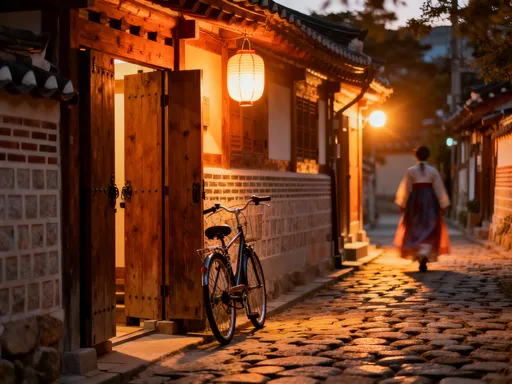
The city’s identity unfolds across three main zones: the historic Old Town perched on Nebet Tepe and Taksim Tepe, the bustling city center in the valley below, and the expanding residential and cultural neighborhoods that stretch outward. The Old Town, with its 19th-century Bulgarian Revival houses, narrow cobbled streets, and panoramic viewpoints, feels like a preserved enclave. Pastel facades with carved wooden balconies line the hills, offering postcard-perfect scenes at every turn. Yet just a short drive downhill, the city pulses with modern energy—cafes spill onto sidewalks, trams glide through wide boulevards, and shopping centers hum with activity.
What makes Plovdiv exceptional is how these zones connect. A five-minute drive can take you from the silence of an ancient fortress to the buzz of a contemporary art gallery. The Roman Stadium, once buried beneath the modern city, now lies partially exposed under a glass floor in the middle of a busy street. This blending of eras is not accidental—it reflects a civic pride in continuity, a belief that history should not be cordoned off but woven into daily life. Driving through Plovdiv, you feel these transitions not just visually, but physically—the incline of the road, the change in building materials, the shift in ambient sound from birdsong to traffic.
Even the city’s name tells a story of convergence. Known in antiquity as Philippopolis, it later became Filibe under Ottoman rule before reclaiming its ancient Thracian roots as Plovdiv. This linguistic evolution mirrors the city’s architectural and cultural hybridity. In the Kapana district, for instance, a restored 19th-century factory now houses design studios and microbreweries. A former communist-era cinema screens independent films. These transformations are not erasures of the past but reinterpretations, and driving allows you to trace this evolution block by block. You begin to see Plovdiv not as a museum, but as a living organism—constantly adapting, yet deeply rooted.
The Route Less Rushed: Scenic Drives Through Urban Zones
To truly experience Plovdiv’s layered identity, a carefully planned driving route offers the ideal framework. Rather than rushing from one attraction to the next, a scenic urban loop allows you to absorb the city’s transitions at a contemplative pace. Begin in the city center, where the remains of the Roman Stadium lie beneath the main pedestrian street. Park nearby and walk down to view the ancient structure through its glass enclosure—a powerful reminder that history lies just beneath the surface of daily life.
From there, drive uphill toward the Old Town, following the winding road that ascends Nebet Tepe. The climb itself is part of the experience—each turn revealing new vantage points over the city. As you enter the historic quarter, the streets narrow, the traffic thins, and the sounds of modern life fade. Park in one of the designated lots near Ethnographic Museum and explore on foot, but return to your car to continue the journey. The act of driving in and out of the Old Town reinforces its distinction as a hilltop sanctuary, separate yet connected to the city below.
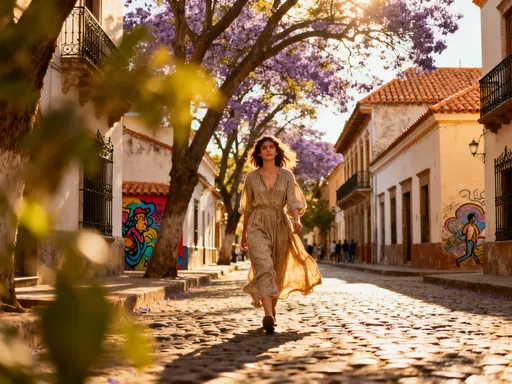
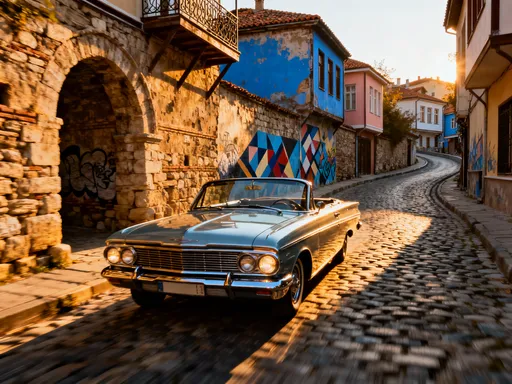
Your next leg takes you westward into Kapana, a district whose name means “the Trap” in Bulgarian, a reference to its maze-like streets. Once an industrial zone, Kapana has been transformed into Plovdiv’s creative heart. As you drive through, notice the murals that cover entire building facades—some whimsical, others political, all vibrant. Look for street signs painted with artistic flair, small galleries tucked into old workshops, and the occasional pop-up market in a repurposed warehouse. Parking is available along designated streets, but arrive early in the day to secure a spot, as evenings bring crowds to its cafes and live music venues.
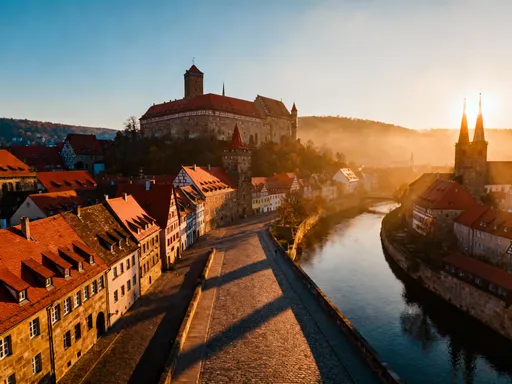
For a panoramic conclusion, drive to the Plovdiv Regional Historical Museum viewpoint or the nearby Sahat Tepe, where a clock tower stands sentinel over the city. From here, the urban landscape unfolds in all directions—red rooftops, church domes, the winding Maritsa River, and the Rhodope Mountains in the distance. This is a moment best savored from your car, windows down, engine off. No guidebook can prepare you for the quiet awe of seeing a city that has endured for millennia, now glowing under the afternoon sun. The route, though simple, becomes a narrative: descent into antiquity, ascent into memory, and a slow return to the present.
Kapana: Creative Grit and the Pulse of the Present
Kapana is where Plovdiv’s contemporary spirit thrives. Once a neglected industrial area filled with abandoned workshops and storage buildings, it has emerged as a hub of creativity, innovation, and urban renewal. The transformation began in the early 2010s, driven by local artists, entrepreneurs, and community activists who saw potential in the district’s raw spaces. Today, Kapana is a testament to what happens when culture and commerce intersect with vision. Driving through its streets, you don’t just see change—you feel it in the air, in the hum of conversation, in the scent of coffee and street food.
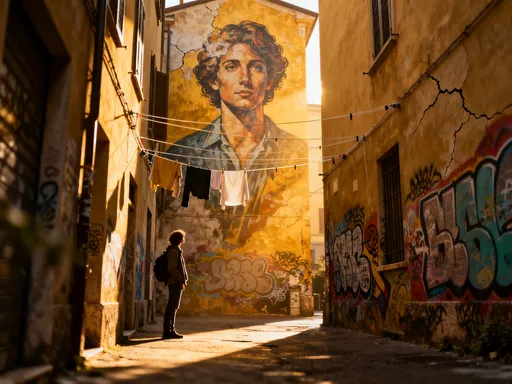
The district’s layout, with its narrow, interconnected alleys, rewards slow exploration by car. Unlike grid-based neighborhoods, Kapana invites detours and discoveries. A side street might lead to an open-air sculpture garden; a nondescript doorway could open into a craft brewery with live jazz. Street art is everywhere—not as decoration, but as dialogue. Murals depict historical figures, social themes, and abstract expressions, each telling a story about identity, resistance, or hope. Some walls change seasonally, updated by visiting artists during festivals, making repeat visits rewarding.
For visitors, Kapana offers a refreshing alternative to traditional tourist zones. Instead of souvenir shops and crowded restaurants, you’ll find independent designers, bookstores specializing in Balkan literature, and cafes that roast their own beans. Stop at a small courtyard eatery to try locally sourced dishes like stuffed peppers or slow-cooked lamb with rosemary. Order a glass of Mavrud, a native Bulgarian red wine, and sip it under strings of fairy lights as musicians tune their instruments nearby.
What sets Kapana apart is its authenticity. While it has gained popularity, it has resisted becoming a sanitized tourist zone. Residents still live in converted lofts above studios; children play in shared courtyards; neighbors greet each other by name. As a driver, you’re not just passing through—you’re part of the neighborhood’s rhythm. Parking is modest but manageable, and walking even short distances reveals hidden corners. The key is to move slowly, to let curiosity guide you. In Kapana, the best experiences aren’t listed on maps. They’re found in a chance encounter, a shared smile, or the sudden realization that you’ve stumbled upon something real.
Beyond the Center: Hidden Neighborhoods Only Drivers Reach
While most visitors focus on Plovdiv’s historic core and Kapana, the city’s full character reveals itself only when you venture further. Residential neighborhoods like Trakia, Voden, and Kichuk Pariz (Little Paris) offer a different perspective—one rooted in daily life, local routines, and quiet beauty. These areas are rarely featured in travel brochures, yet they are essential to understanding Plovdiv as a living city, not just a historical showcase.
Trakia, developed during the socialist era, is a planned neighborhood with wide avenues, green spaces, and functional architecture. At first glance, it may seem ordinary, but closer inspection reveals its charm. Neighborhood markets sell fresh produce from nearby villages. Elderly residents sit on benches under plane trees, reading newspapers or knitting. On weekends, families gather in parks for picnics or informal football games. Driving through Trakia, you witness the city’s resilience—a place that grew to meet the needs of its people, adapting over time while maintaining a sense of order and community.
Voden, located to the southeast, is quieter, more residential, with a mix of older homes and newer constructions. Here, the pace slows. Streets are lined with flowering trees, and the sound of traffic fades. You might pass a small Orthodox church with a freshly painted dome, or a schoolyard where children’s laughter spills over the walls. Bakeries display golden trays of kozunak, a sweet bread often baked for holidays. These are not staged scenes—they are the uncurated moments of a city at ease with itself.
Kichuk Pariz, despite its grand name, is a modest neighborhood known for its early 20th-century villas with ornate facades and wrought-iron balconies. Though not as polished as the Old Town, it exudes a quiet elegance. Some homes are being restored, others await attention, but all speak to a time when Plovdiv’s middle class built with pride and artistry. Driving through, you feel a sense of continuity—how generations have lived, worked, and raised families in these same streets.
Exploring these areas requires respect and mindfulness. These are not tourist zones; they are homes. Observe local driving etiquette: avoid honking unnecessarily, yield to pedestrians, and park only in designated areas. A slow, courteous approach ensures a positive experience for both visitors and residents. By venturing beyond the center, you gain a fuller picture of Plovdiv—one that includes not just its grandeur, but its grace.
Parking, Patience, and the Rhythm of the Road
Self-driving in Plovdiv, while rewarding, comes with practical considerations. The city’s mix of ancient streets and modern infrastructure means navigation requires both awareness and adaptability. The Old Town, for instance, has steep, narrow lanes with limited vehicle access. Some streets are pedestrian-only, clearly marked with signs and bollards. Attempting to drive through them not only causes frustration but may result in fines. It’s best to park at the edge of the district and explore on foot, using your car as a base rather than a constant companion.
Parking in central areas is generally well organized but can fill up quickly, especially on weekends and during festivals. Paid parking zones are marked with blue lines and monitored by attendants or digital systems. Mobile apps like ParkMe or local municipal platforms can help locate available spots and pay fees remotely. Rates are reasonable by Western European standards, typically ranging from 1 to 2 euros per hour. In residential neighborhoods, parking is more relaxed, but always look for signs indicating restrictions, particularly near schools or public buildings.
Local driving habits are generally calm, though drivers may use their horns more frequently than in some countries—not out of anger, but as a signal, especially when approaching blind curves or narrow intersections. Roundabouts are common, and the right-of-way rule is observed, though yielding can be fluid. Patience is key. Unlike high-speed highways, urban driving in Plovdiv is about flow, not speed. Allow time for delays, unexpected detours, or moments when you simply stop to take in a view.
For added convenience, consider renting a compact car. Narrow streets and tight parking spaces make smaller vehicles easier to maneuver. Ensure your rental includes city insurance and a reliable GPS or offline map app, as some older districts may have inconsistent signage. Above all, embrace the rhythm of the city. Driving in Plovdiv is not about efficiency—it’s about presence. When you accept the occasional wrong turn as part of the journey, you open yourself to discovery. A missed exit might lead to a hidden garden. A traffic pause might reveal a street musician playing accordion under an archway. In this city, even the detours have meaning.
Why the Journey Is the Destination
By the end of a self-driven exploration of Plovdiv, one truth becomes undeniable: the act of driving through the city is not merely a means to an end. It is the essence of the experience. Each turn of the wheel, each shift in landscape, each unplanned stop contributes to a deeper, more personal understanding of place. Unlike tours that deliver curated highlights, self-driving allows you to construct your own narrative—one shaped by curiosity, timing, and serendipity.
In Plovdiv, where history is not confined to museums but embedded in the streets, this form of travel fosters intimacy. You don’t just see the city—you feel its layers, its contrasts, its quiet moments of beauty. The transition from the solemnity of an ancient fortress to the laughter in a Kapana courtyard, from the stillness of a residential street to the energy of a market square—these shifts are not just visual. They are emotional, almost spiritual. They remind us that cities, like people, are complex, evolving, and full of surprises.
Moreover, driving cultivates patience and presence. In an age of instant access and digital saturation, the slow, deliberate act of navigating a city by car becomes a form of mindfulness. You notice details you’d otherwise miss—the way light filters through a vine-covered arch, the sound of church bells echoing across rooftops, the scent of rain on warm stone. These moments, fleeting yet profound, become anchors in memory.
For the traveler, especially one seeking connection over consumption, Plovdiv offers a rare gift: the chance to engage with a city as both observer and participant. And behind the wheel, you are not just moving through space—you are weaving yourself into its story. The journey, then, is not measured in kilometers, but in moments of wonder. In Plovdiv, those moments are everywhere, waiting just beyond the next turn.