You Won’t Believe These Hidden Gems in Patan’s Ancient Streets
Walking through Patan, Nepal, feels like stepping into a living museum. Every alley whispers history, and the landmark buildings? Absolutely mind-blowing. As someone who’s wandered countless cities, I never expected such quiet grandeur. This isn’t just sightseeing—it’s soul-stirring. In this guide, you’ll discover how to truly experience Patan’s architectural wonders, avoid common tourist traps, and connect with its living heritage in a meaningful, practical way. Unlike other destinations where ancient beauty has been overtaken by commercialization, Patan remains rooted in authenticity. Here, tradition isn’t performed for cameras—it’s lived. From intricately carved temples to hidden courtyards where monks chant at dawn, this city invites you to slow down and truly see. And for travelers seeking depth, beauty, and cultural richness without the frenzy, Patan delivers beyond expectation.
Why Patan Deserves More Than a Day Trip
Patan, also known as Lalitpur, is one of the three historic cities in Nepal’s Kathmandu Valley, yet it often plays second fiddle to its more famous neighbors. While many tourists rush through on a half-day tour before returning to Kathmandu, those who linger discover a city of remarkable depth and calm. Its name, Lalitpur, means 'City of Beauty,' and every corner lives up to that promise. What sets Patan apart is its seamless blend of art, spirituality, and everyday life. This is not a preserved relic frozen in time, but a vibrant urban center where centuries-old traditions continue to shape daily routines.
Located just across the Bagmati River from central Kathmandu, Patan is easily accessible—yet feels worlds apart. While Thamel buzzes with backpackers and neon signs, Patan unfolds in quieter tones: the chime of temple bells, the scent of incense drifting from courtyards, and the rhythmic tapping of chisels in artisan workshops. The city’s compact size makes it ideal for walking, allowing visitors to absorb its atmosphere at a human pace. And because it’s less overrun by mass tourism, the sense of discovery is far more intimate. You’re not just passing through—you’re invited to pause, observe, and connect.
Historically, Patan was a major hub of trade, culture, and religious scholarship. As a key stop on the ancient trade routes between India and Tibet, it flourished under the patronage of Newari rulers who championed architecture, sculpture, and Buddhist learning. This legacy is visible in its urban design—narrow brick-paved alleys leading to hidden plazas, multi-tiered temples rising above tiled rooftops, and residential homes adorned with carved wooden windows. These aren’t museum pieces; they’re lived-in spaces where generations have raised families, practiced faith, and passed down skills. Understanding this continuity transforms a simple visit into a meaningful encounter with resilience and artistry.
For women travelers, especially those between 30 and 55 who value thoughtful, enriching experiences, Patan offers a rare opportunity. It’s a place where history isn’t shouted from billboards but whispered in the details—the pattern of a stone mandala, the curve of a deity’s smile, the way sunlight filters through a lattice window. There’s no need to rush. Instead, the city rewards patience and presence. Whether you’re traveling solo, with a partner, or in a small group, Patan provides space for reflection, learning, and quiet joy. By choosing to spend more than a day here, you step out of the tourist role and into a deeper relationship with a living cultural landscape.
Patan Durbar Square: More Than Just a UNESCO Site
At the heart of Patan lies its Durbar Square, a UNESCO World Heritage Site that serves as both a historical centerpiece and a living spiritual space. Unlike static monuments elsewhere, this square pulses with daily activity—locals offering prayers, children playing near temple steps, artisans setting up their stalls. The complex was once the royal palace of the Malla kings, and though much of the original structure has been lost to time and earthquakes, what remains is breathtaking. Stone courtyards, ornate temples, and intricately carved wooden struts showcase the mastery of Newari craftsmanship at its peak.
One of the most striking features of the square is the Krishna Mandir, a stone temple built in the 17th century in the style of South Indian architecture. Dedicated to Lord Krishna, its walls are covered with detailed carvings depicting scenes from the Mahabharata and Ramayana. The temple sits on a raised platform, accessible by steep stone steps—a reminder that sacred spaces often require effort to reach. Nearby, the Golden Temple, or Hiranya Varna Mahavihar, is a working Buddhist monastery with a gilded roof and a serene inner sanctum. Its peaceful ambiance offers a perfect contrast to the more elaborate Hindu temples, inviting quiet contemplation.
For visitors, timing is key to fully appreciating the square. Early morning, just after sunrise, is ideal. The light is soft, the air cool, and the crowds minimal. This is when photographers can capture the golden glow on stone carvings and when meditative stillness settles over the courtyards. Entry to the main square requires a permit, which can be purchased at the ticket counter near the eastern entrance. The fee contributes directly to preservation efforts, making your visit a small act of cultural support. Audio guides and local guides are available, though hiring a knowledgeable local guide—especially one from a community-based tourism initiative—adds depth and context to what you’re seeing.
Another must-see is the Royal Bath, or Tusha Hiti, an exquisite sunken bath carved from stone and designed for royal purification rituals. Surrounded by carved deities and floral motifs, it’s a masterpiece of hydraulic engineering and aesthetic harmony. Though no longer in use, it stands as a testament to the sophistication of Newari urban planning. As you walk through the square, notice how modern life coexists with ancient structures—vendors selling marigolds for temple offerings, schoolchildren in uniform pausing to pray, and elders sitting on stone benches sharing stories. These moments remind us that heritage isn’t separate from life; it is woven into it.
Hidden Courtyards and Lesser-Known Temples
Beyond the well-trodden paths of Durbar Square, Patan reveals its most intimate treasures: the hidden *bahals* and quiet temples tucked into residential neighborhoods. These spaces, often invisible to casual visitors, are where the city’s spiritual heart continues to beat. A *baha* or *bahal* is a traditional Newari Buddhist monastery centered around a courtyard, typically surrounded by prayer rooms, stupas, and resident monks’ quarters. Unlike grand temples built for public spectacle, these courtyards are designed for daily practice, study, and community gathering.
Sundari Chowk, part of the Kumbheshwar Temple complex, is one such gem. Though the main temple is dedicated to Shiva and draws occasional visitors, the adjacent courtyard is a place of hushed reverence. Here, stone reliefs depict deities in meditative poses, and water spouts shaped like mythical creatures still function for ritual cleansing. Early in the morning, you might see women in red and gold saris filling copper pots, carrying them home for household puja. The sound of chanting drifts from an upper chamber where monks recite sutras. There’s no entry fee, no crowds—just a space where faith unfolds naturally, undisturbed by tourism.
Another quiet sanctuary is the Krishna Narayan Temple, located a short walk from the main square. Smaller and less ornate than its namesake, this temple is cherished by locals for its peaceful energy. Its courtyard often hosts small gatherings during festivals, but on ordinary days, it’s a place of solitude. Benches under banyan trees invite rest, and the scent of frangipani lingers in the air. These lesser-known sites offer a different kind of travel experience—one focused not on checking boxes, but on feeling presence.
When visiting such places, a few simple practices go a long way. Always remove your shoes before entering temple grounds or courtyards. Dress modestly, covering shoulders and knees, as a sign of respect. Speak softly, especially near prayer halls, and avoid using flash photography during rituals. Never touch ritual objects or step over prayer mats. If you’re unsure about local customs, a quiet smile and a slight bow are universally understood gestures of humility. By honoring these spaces as living, not just historical, you become part of their continuity rather than a disruption.
The Living Craftsmanship Behind the Stone and Wood
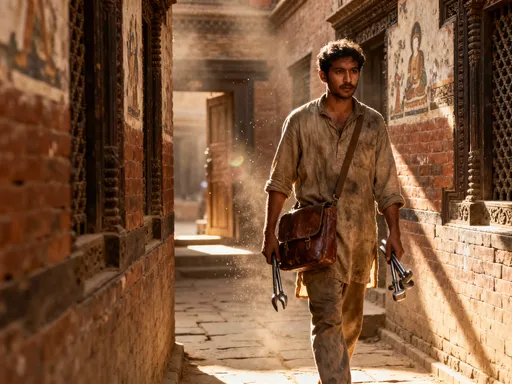
The beauty of Patan’s architecture isn’t just in its age—it’s in the hands that built it and continue to sustain it. For centuries, Newari artisans have passed down skills in metalwork, wood carving, brick making, and stone sculpting through family lineages. These crafts are not hobbies or tourist performances; they are sacred duties, often tied to religious devotion and community identity. Walking through Patan’s alleys, you’ll hear the steady rhythm of hammers on metal, see wood shavings spiral from chisels, and smell the earthy scent of drying clay bricks.
Many workshops are small, family-run operations tucked into ground floors of traditional homes. Some are open to visitors, offering a chance to see artisans at work. In the area around Mangal Bazar, you can find metalworkers crafting intricate repoussé designs on copper and bronze—items used in temples and homes alike. Others specialize in wood carving, producing everything from temple struts to household doors adorned with deities and floral patterns. These carvings are not merely decorative; each symbol carries meaning. A peacock represents wisdom, a lotus stands for purity, and a coiled serpent signifies protection.
Supporting these artisans is one of the most meaningful ways to travel responsibly. Instead of buying mass-produced souvenirs, consider purchasing a hand-hammered singing bowl, a carved wooden box, or a brass oil lamp. These items carry the energy of their making and serve as lasting reminders of your journey. Look for cooperatives or fair-trade shops that ensure artisans receive fair compensation. Some community centers even offer short workshops where visitors can try basic carving or metalwork under guidance—perfect for those who want to connect more deeply.
What makes this craftsmanship remarkable is its integration into daily life. A temple damaged in an earthquake isn’t replaced with modern materials; it’s restored using traditional techniques and locally made bricks. This commitment to authenticity ensures that Patan’s heritage remains alive, not frozen. For women who value purposeful travel, meeting these artisans—listening to their stories, understanding their craft—offers a profound sense of connection. It reminds us that culture isn’t just something to observe; it’s something to support, sustain, and honor.
Navigating the City: Transport, Timing, and Terrain
Reaching Patan from central Kathmandu is straightforward and affordable. The most scenic option is to walk across the Bagmati River via the pedestrian bridge near Swayambhunath (the Monkey Temple). The path offers views of riverside ghats, prayer flags fluttering in the breeze, and glimpses of daily life along the water’s edge. For those with limited mobility or heavy bags, a short taxi ride from Thamel or Lazimpat takes about 20 minutes, depending on traffic. Local buses are the most economical choice, though they can be crowded and less comfortable for first-time visitors.
Once in Patan, the best way to explore is on foot. The city’s historic core is compact, with most major sites within a 20- to 30-minute walk of each other. However, the terrain can be challenging. Streets are often narrow, uneven, and paved with worn bricks. Many temple entrances involve steep stone steps, so comfortable, supportive footwear is essential. Closed-toe shoes with good grip are recommended, especially during the monsoon season when surfaces become slippery. Carrying a small backpack with water, sunscreen, and a light shawl is practical for changing weather and temple visits.
Timing your visit can greatly enhance your experience. The dry season, from October to March, offers clear skies and mild temperatures—ideal for walking and photography. April and May can be hot, while June to September brings the monsoon, with frequent rain and high humidity. If you visit during monsoon, pack a compact umbrella or raincoat and plan indoor activities like museum visits for afternoon downpours. Mornings are generally the best time for sightseeing, as light is optimal and crowds are thinner. Many temples and shops close by 5 or 6 PM, so plan accordingly.
Technology can be spotty in older parts of the city. Mobile data signals weaken in narrow alleys, and Wi-Fi isn’t always reliable. Downloading offline maps or a local guide app before arrival is highly recommended. Paper maps are also available at tourist information centers. If you’re traveling independently, consider printing a simple itinerary with key landmarks and addresses. For those who prefer guided experiences, local women-led tour groups offer culturally sensitive walks tailored to thoughtful travelers—ideal for building confidence and connection.
Where to Pause: Cafés and Viewpoints with Purpose
Traveling through Patan is as much about the pauses as the movement. Knowing where and how to rest can transform a tiring day into a nourishing experience. The city offers several quiet spots where you can sip tea, reflect, and absorb the atmosphere without commercial intrusion. One of the most beloved is a small café near the Patan Museum, run by a local women’s cooperative. From its rooftop terrace, you can see the golden spire of the Golden Temple and watch the light shift across temple roofs. They serve traditional snacks like *sel roti* (a ring-shaped rice bread) and *chiura* (beaten rice) with yogurt—simple, wholesome, and deeply local.
Another peaceful stop is a garden café near the Kumbheshwar Temple complex. Hidden behind a modest doorway, it opens into a leafy courtyard with tables under flowering trees. The owners prioritize sustainability, using compostable materials and sourcing ingredients from nearby farms. Profits support a local literacy program for women, making every purchase a small act of empowerment. These kinds of spaces allow you to rest while contributing to the community—a win-win for mindful travelers.
But not every pause needs to involve spending money. Some of the most powerful moments come from simply sitting on a stone bench in a quiet corner of Durbar Square, watching elderly men play chess or listening to the echo of bells from a distant shrine. Under the shade of a centuries-old banyan tree near a temple gate, you might see mothers gathering with children, sharing stories in hushed voices. These organic moments of stillness deepen your connection to the place. They remind you that travel isn’t just about seeing new things, but about feeling them—letting the rhythm of another culture gently reshape your own.
For those who enjoy journaling or sketching, these quiet spots are ideal. Bring a small notebook and capture not just what you see, but what you feel—the warmth of the sun on stone, the scent of marigolds, the sound of a monk’s chant fading into silence. These sensory memories often last longer than any photograph. And for women who value introspection and personal growth, such pauses are not luxuries—they are necessities.
Traveling with Respect: A Practical Code for Cultural Sites
Responsible tourism in Patan begins with a simple truth: these sites are not museums. They are active places of worship, community, and daily life. Approaching them with humility and awareness transforms your visit from observation to participation. Dressing modestly is the first step—shoulders and knees covered, shoes removed when entering sacred spaces. This isn’t about restriction; it’s about alignment with local values and showing respect for what these places mean to the people who live here.
Behavior matters just as much as appearance. Speak softly, especially near prayer halls or meditation areas. Avoid loud conversations or laughter that might disturb rituals. Never touch statues, altars, or ritual objects—even if they look unattended. Flash photography during prayers is disruptive and often offensive. If you’re unsure whether photography is allowed, ask politely or observe what locals are doing. In many temples, signs or attendants will indicate the rules.
Another powerful way to travel respectfully is through small, intentional actions. Donate to temple restoration funds if you’re able—many sites rely on community contributions for upkeep. Hire local guides, especially women or youth from training programs, to support economic empowerment. Buy from small vendors rather than imported souvenir stalls. These choices may seem minor, but collectively, they help preserve Patan’s authenticity and ensure that tourism benefits its people, not just its buildings.
Finally, carry an attitude of gratitude. When someone greets you with a smile or offers help, respond with kindness. A simple 'namaste' with hands pressed together goes a long way. These gestures build bridges, even without shared language. By traveling with care, you honor not just the past, but the present—acknowledging that culture is alive, evolving, and worthy of deep respect.
Patan’s landmark buildings are more than stone and timber—they’re testaments to endurance, artistry, and daily devotion. By approaching them with curiosity and care, you don’t just see history; you honor it. Whether you're planning your first visit or returning with deeper intent, let Patan remind you that the most powerful journeys are those that move quietly, respectfully, and with open eyes. In a world that often values speed and spectacle, Patan teaches the beauty of slowness, the strength of tradition, and the quiet dignity of a life well lived. Let it inspire your next chapter—one of mindfulness, connection, and lasting meaning.